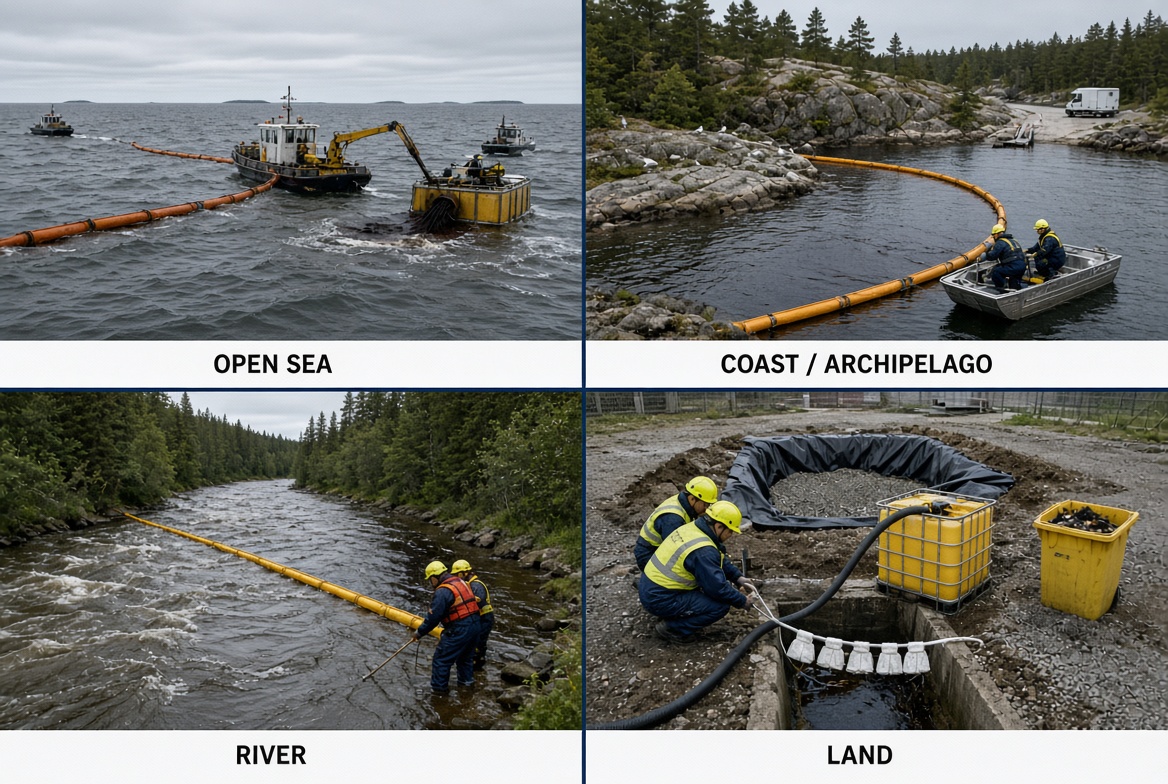
Mechanical response: open sea, coast/archipelago, rivers, land
Module 3 of 6
At sea the sequence is usually surveillance, booming where current and wave height allow, and skimming into temporary storage. On the coast and in the archipelago the priority is exclusion booming of bays, bird islands and water intakes with 750–900 mm shoreline booms.
In rivers the current dictates boom angle and anchor points; a boom set square to the flow will fail. On land the task is to stop migration into soil and drains, then collect with sorbents, vacuum and lined buffer pits. Always match the method to the site, not the other way around.