Oil spills and oil-spill response — overview
Module 1 of 6
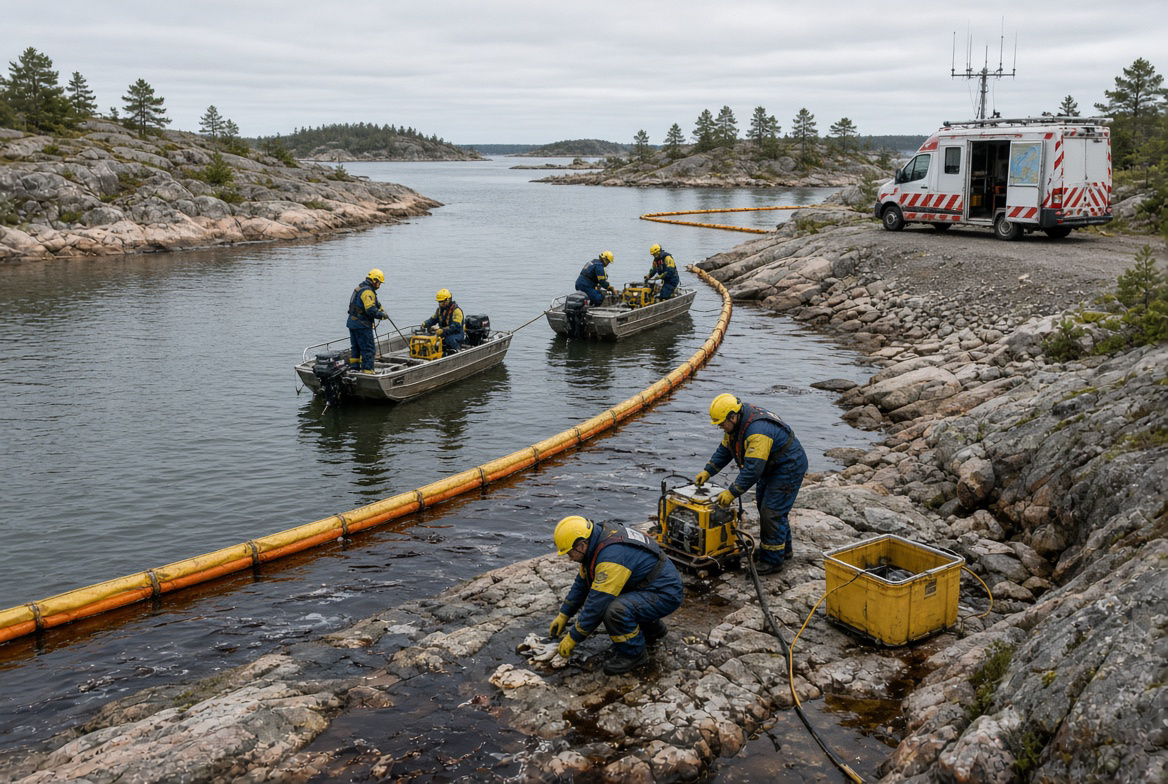
Oil-spill response starts with recognising the product, the water body and the time window. A spill at sea weathers: it spreads, evaporates, mixes and can emulsify into a much larger volume. The first aim is to stop further release, protect sensitive shoreline, and recover oil mechanically where it is safe and effective.
Alternative methods (dispersant, in-situ burning) are exception tools, not the default in Finnish archipelago and river conditions. Command sits with the rescue-service authority for the area where the incident started.